Young African
Teacher Scholarship
A scholarship for young African teachers, researchers, and public servants to attend the Summer School Planning and Design for the Just City at TU Delft.

Delft Global and the Department of Urbanism invite young African teachers, researchers, and public servants to apply for this special scholarship.
The scholarship is intended for young professionals under the age of 35 who are affiliated to a higher education or research institution, or to a local or national government, and who wish to build expertise in spatial planning, urban design, and spatial justice.
The rationale for targeting young teachers is the concept of the multiplier: a trained teacher returns to their institution carrying knowledge, methods, and networks that reach far beyond a single student. Upon completing the Summer School, recipients are expected to bring what they have learned back to their teaching context, their colleagues, and their students. We particularly encourage applications from young female African teachers.
The scholarship also creates opportunities for lasting links between African higher education institutions and TU Delft for future research and educational partnerships.
Why This Scholarship Matters for African Urbanisation
Principles and methods for planning resilient, sustainable cities — including an introduction to Dutch plan-making, water management, and the institutional landscape of spatial governance. Directly applicable to the challenges of rapid African urbanisation.
Analytical tools for understanding who cities are built for and who they exclude. Methods for challenging spatial inequality through planning, governance, and participatory design — with global relevance and direct application to African urban contexts.
Direct experience of TU Delft’s interactive, studio-based pedagogy — methods you can observe, critically evaluate, and adapt for your own teaching context. This is the multiplier element: the techniques you bring back matter as much as the content.
Candidates Must Meet All of the Following
- 35 years old or younger by December of the year of application
- Affiliated to a higher education or research institution, or to a local or national government body
- Holds a teaching or instructor position, or is a civil servant working with urban or regional planning
- Fluent in English (all sessions and written outputs are in English)
- Committed to teaching the principles acquired at the Summer School upon return to their institution
- Able to provide a signed, stamped proof of institutional affiliation
Candidates must be active in one of the following areas, or in a field with a close relationship to planning and design of sustainable cities and communities:
What the Scholarship Covers
Total scholarship value: up to €2,000. Candidates may allocate this across the covered items according to their travel situation. If any costs exceed the total, the candidate covers the difference. TU Delft is not responsible for financing costs beyond €2,000.
The scholarship covers only the items listed above. The Summer School course fee is not charged to scholarship recipients. Personal expenses, visa costs, and insurance are not covered.
Step-by-Step Application Guide
Make sure you meet all the criteria before investing time in your application. If you are in doubt about your eligibility, write to us before applying.
Explain your ideas and how you can benefit from the Summer School. This is a personal letter — avoid clichés and model letter phrases. We are interested in you as a person and as a teacher: your context, your students, and what you hope to bring back.
Include your academic and professional background. Give particular attention to your activities as a teacher, instructor, researcher, or civil servant — this is what we need to assess the multiplier potential of your application.
Ask a senior teacher or senior public servant at your institution to confirm your affiliation and describe your role. The letter must be signed and, where applicable, stamped.
Introduce yourself: who you are, what your work involves, and how you believe the Summer School can benefit you and your institution. Speak directly to the camera. No production quality is required — content matters.
Compile all materials and submit through the link below. Incomplete applications will not be reviewed.
Note: Design portfolios will not be reviewed or considered in the selection process.
What Is Expected of You

Njabulo Ngcobo
School of Built Environment, University of KwaZulu-Natal, South Africa
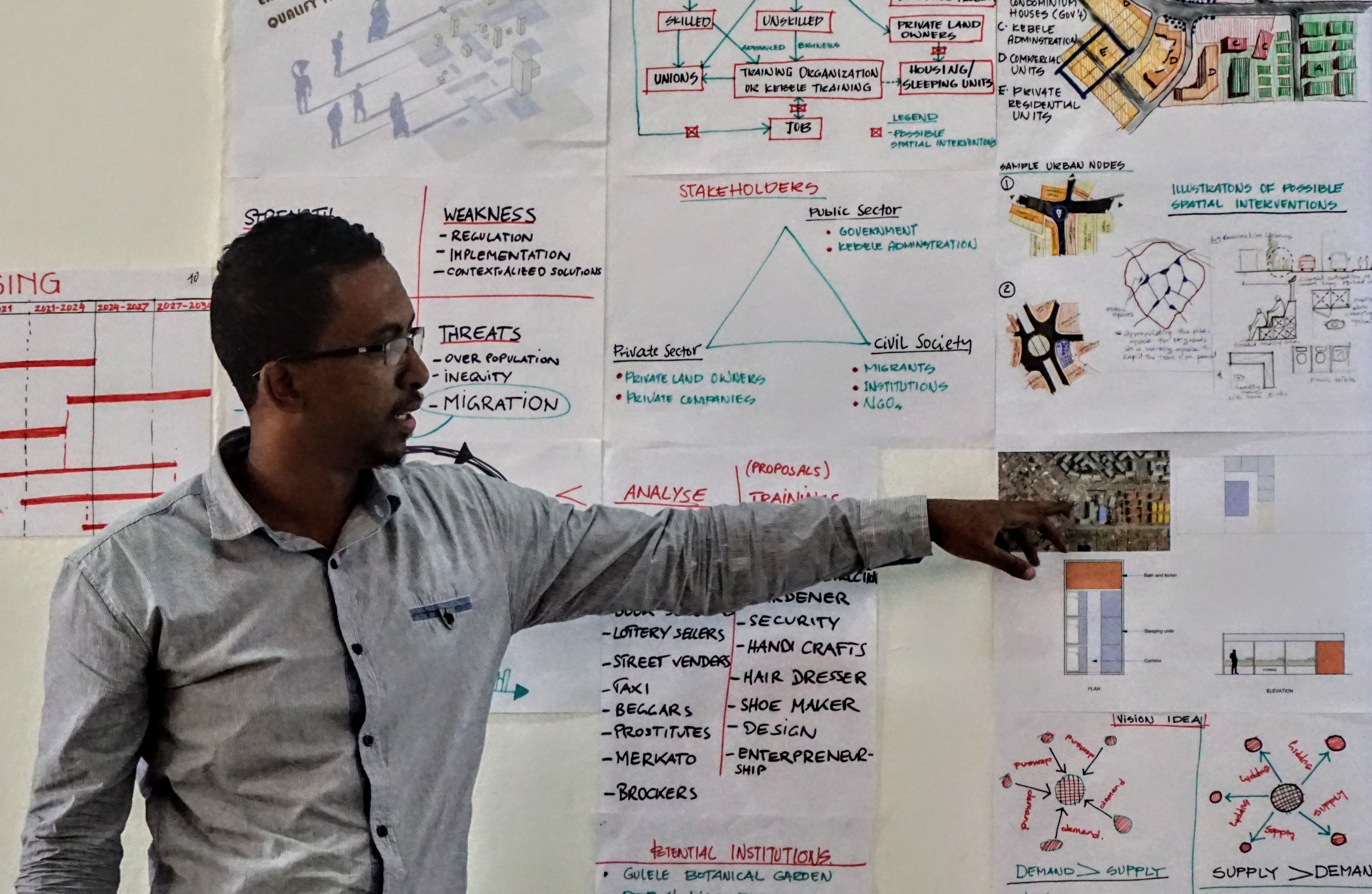
My general impression of the 2018 TU Delft Summer School is that it was a well-organised and successful programme. It offered a conducive environment for participants from 40 countries to share knowledge and apply the Dutch perspective — the polder model — where relevant. There were also other examples and lessons shared by students, lecturers, and guest speakers from different countries. Coming to the Netherlands was also a unique chance for me to meet new friends and to explore models of European urbanism and way of life.
The Summer School comprised site visits and excursions to Scheveningen, The Hague Municipality, and Rotterdam. This was very exciting: we had a chance to learn more about Dutch history and culture — to interact with ordinary citizens at a grassroots level and to observe water projects, among other things.
Regarding the quality of the student presentations, my general impression was that students were well prepared, with sound ideas — highly creative, hands-on, and generally exceeding expectations. They learned how to work in teams. Working with multidisciplinary groups, sometimes with clashing ideas and cultures, was one of the things I hoped for.
I would like to emphasise the importance of putting forward your ideas and opinions in a respectful, humble, and creative manner when trying to forge understanding in groups consisting of multicultural and multidisciplinary participants.
From the presentations by the lecturers and guest speakers, I noted the following focus areas as highly important to my career:
- Scenario planning that caters for uncertainty
- Multifunctional infrastructures — hard, soft, and green-blue
- Interconnected ecological places, good governance, and people-centred planning
I wholeheartedly recommend this Summer School to young built environment professionals in Africa and the world.