Please, don’t forget to visit the main page HOW TO APPLY to get all the information about applications.
VISAS
TU Delft provides letters of invitation for selected students so that they can get a visa for the Netherlands when necessary. It does so after careful investigation.
However, the university is not responsible for the granting of a visa to you. Visas are granted by Dutch authorities abroad upon careful consideration, the presentation of the necessary documents and payment of a fee. Students willing to participate in the Summer School are responsible for arranging their own visas.
If you need a visa, you should apply for a short-stay tourist visa that generally allows you to stay in Europe for 90 days. You do need to apply for a student visa, which is a lengthy and complicated process. The Summer School can be characterised as a short workshop (10 days) hence there is no need to apply for a student visa.
Visas granted by Dutch authorities allow you to travel within the Schengen Area. This is the area in Europe where free movement of people is allowed, so you can travel to other countries in Europe with just one visa. This area does not include the UK, Ireland and some other European countries.
Please note that VISA FEES ARE NON-REFUNDABLE, so if you cannot come to the Netherlands after getting a visa, you won’t be able to get a refund.
ACCOMMODATION
Students attending the Summer School are responsible for finding their own accommodation. We will help you with suggestions of places to stay in Delft, but please remember we cannot help you with all the details of your trip. There are a very limited number of places in hostels in Delft, but we suggest you try THE SOCIAL HUB, which is super convenient and within walking distance from the venue where the summer school takes place.
If the Student Hotel is not an option, we suggest you try alternative methods: Airbnb, Couch-Surfing, friends and student forums (a small number of students sublet their apartments during the holidays).
There are also internet Forums on which you can find TU Delft students who sublet their rooms for the Summer. You must Google these forums but HERE is an example.
You can check accommodation HERE and HERE.
TU Delft has no special agreements with hotels or hostels in Delft, so we cannot give you a discount.
TU Delft (different from universities elsewhere) does not have student dorms. All students must rent a room from an independent provider.
FEES
The fee for the Summer School is 500 euros. This covers the whole course, including the final certificate. It also includes some meals, site visits and social activities. This price is very low compared to other similar Summer Schools in Europe. We have a low-fee policy in order to allow for a wide range of people to attend the Summer School and get to know our teaching philosophy at TU Delft. The whole experience is a good introduction to our Master courses. There are a number of scholarships and special fees, which you can see HERE.
This fee DOES NOT INCLUDE TRAVEL COSTS, ACCOMMODATION and MEALS.
What happens if I give up after having paid?
In case you are prevented from coming to the Summer School, we will return your fee in full (excluding bank fees), until June 1st. After that date, there are no refunds. Just to be clear: we will return your fees minus bank fees (around 25 euros).
After June 1st, we will not return fees.
Note that this arrangement does not include hostel reservations (see below) and visa costs (in case you need a visa). Visa costs are not refundable.
If you give up after the beginning of the summer school, there are no refunds.
SCHOLARSHIPS*
The Summer School offers five types of scholarships:
- SUB-SAHARAN AFRICA Summer School Scholarship
- SPECIAL FEES FOR TRANSITION ECONOMIES
- SPECIAL FEES SMALL STATES
- YOUNG AFRICAN TEACHERS SCHOLARSHIP
Please, visit each page for specifications on different types of scholarships.
(*This only applies to the Summer School Planning & Design for the Just City. TU Delft has different scholarship policies concerning its regular courses. You can get an overview HERE).
ECTS/ CREDITS
The Summer School does not afford ECTs (European Credit Transfer System or simply, study credits). This is because in order to be able to get ECTS, you would need to be a regular student of TU Delft and the fees would be consequently much higher.
However, the Summer School provides you with a certificate stating that you have followed the course and that it is worth 120 hours of study.
ARRIVAL
The Summer School opens on Monday 30 JUNE 2025 at 10:00 a.m. (registration is from 9:30 to 10:00 a.m.) and closes on Friday 11 JUL 2025 at 16:00 p.m. (so you can check out of your hostel/hotel on that day if you wish).
You must be present during all sessions of the the Summer School in order to receive the certificate. Please, only book trains and planes so you can leave Delft on the last day after 19:00 p.m.
To receive our certificate, you must attend all our activities (see below).
VENUE
The venue of the Summer School is the building of the PULSE BUILDING and the Building of the Faculty of Architecture and the Built Environment. The venues are easily accessible from Delft city centre and from Delft’s main train station on foot or by bus. Delft is a very walkable city.
TRANSPORTATION
Delft is easily accessible from the International Airport of Amsterdam, Schiphol and the smaller airport of Rotterdam by train. DOWNLOAD THE APP and Plan your trip at http://9292.nl or http://www.ns.nl (the train company).
These are examples of train fares:
Amsterdam to Delft € 16,30 (57 minutes)
Schiphol International Airport -Delft €12,30 (40 min.)
The Hague- Delft €3,10 (13 min.)
Delft-Rotterdam €4,10 (13 min.)
You can find information about discounts and season tickets HERE.
Taxis from Schiphol Airport to Delft are expensive, and you might have to pay between 80 and 100 euros for the ride. Please Google for more information. Trains will take you to Delft faster and cheaper. The journey can’t be made by bus.
Transportation to the project site and field trips will be provided to you during the Summer School. However, you can find more information about transportation prices in the Netherlands using the website http://9292.nl Simply insert the addresses of the departing point and the arriving point and it will tell EXACTLY how to get there. (By the way, Google Maps also does that!)
Remember the Netherlands is a very compact country and public transport is very efficient, but not always very affordable for international students.
We encourage you to buy an “OV CHIP CARD” (a public transport card, similar to London’s Oyster Card) for the duration of your stay. It is a plastic card which you need to top up with money. More information can be found HERE.
We also encourage you to make use of bicycles during your stay. You can check more information about how to rent a bike HERE.
Read more about public transport and bikes in Delft HERE.
CERTIFICATE
As with other Summer Schools around the world, we will provide you with a certificate at the end of the experience.
In order to be entitled to this certificate, you must be present to all activities we organise. Students who are not present to all activities without notice to teachers will not be entitled to a certificate.
This certificate is a valid document that will prove you have attended the Summer School, but it does not afford you credits. The certificate is signed by the responsible Professor from the Chair of Spatial Planning and Strategy and estates the number of hours spent in the Summer School (approximately 150 hours of study, divided in 125 contact hours and 25 personal study hours).
MEALS
We will provide you with a few meals during the Summer School, but you are responsible for most meals during the summer school. You need to pay for your own meals.
You can get some information about student meals HERE.
A typical student meal costs around 5 euros. You can also buy food at the several supermarkets in Delft, including one supermarket ON CAMPUS an an ASIAN Supermarket.
Halal food is widely available in several restaurants and shops. Alternatively, it is also possible to order delivery meals, such as pizzas and Chinese food (to be delivered at the university!)
Vegetarian options are widely available in the Netherlands. Please, do let us know if you have very strict dietary restrictions and we will look for alternatives for you. Do let us know if you have serious allergies.
USE OF COMPUTERS AND INTERNET
You will need a laptop for most of the Summer School. Most of our exercises do not require a laptop, but having your laptop at hand will help you. You need to bring drawing materials with you (pens, pencils, etc) and be prepared to participate, talk a lot, write and draw by hand.
We encourage you to bring your own laptop, so you will be able to download information and maps and work on simple programs like Adobe Illustrator, Photoshop, Excel, Word, etc. We have not included GIS-related exercises in the programme of the Summer School, but if you are familiar with GIS, you are most welcome to use your skills during the course.
We are not able to provide you with computers or laptops. Please, bring your own computer.
A Wi-Fi password will be provided to you for use at TU Delft.
SIM CARDS for travellers are available HERE. You can buy a SIM CARD on arrival at Schiphol Airport.
USE OF CASH, BANK CARDS and CREDIT CARDS
(Text adapted from Amsterdam Tips)
“The use of credit cards in the Netherlands is not as well established as elsewhere with most payments being made by cash, debit cards or via internet banking. The thrifty Dutch have much less of a consumer debt culture than say US, UK or Australia and many shops in Holland still do not accept credit card payments. Dutch credit cards use the chip and pin system for making payments in retail outlets – you have to input a pin number rather than just sign a sales slip. Many cards come with a contactless payment option for transactions under €25. Mastercard and Visa are the most widely accepted credit cards in the Dutch retail space; American Express tends to be accepted only by major retailers who have an international client base”.
HERE you can find all information about money, banking and alternative ways to pay for stuff in The Netherlands. You can also find an explanation on how to get your own pin card for payments. This is EXTREMELY USEFUL!
If this is your first time in Europe, you will find out that it is very difficult to move around only using cash. You need a credit card to do transactions via the internet, such as buying plane or train tickets, and also museum tickets.
USE OF MOBILE PHONES
While we understand people are connected 24/7 to social media and chatting programs, we ask our students to refrain from texting during lectures and group activities. There are serious cultural differences involved. While in some countries it is acceptable to text and use the internet while teachers and colleagues are speaking, in the Netherlands this is considered extremely impolite and disruptive. You will be asked to leave the room if you want to carry on texting.
GET A SIM CARD
You can buy one online or in a mobile phone shop. Bear in mind that you’ll need a Dutch address to receive the SIM card should you order it online. You can also pick up a prepaid SIM in some supermarkets and most convenience stores. These stores will often display the name of a phone operator outside, such as Lebara.
Please READ THIS ARTICLE for detailed information.
eSIM in the Netherlands: The Complete Guide for Internationals [2024]
Here are some providers: SIMYO, LEBARA
HEALTH INSURANCE
Everyone in the Netherlands must have insurance for medical expenses, as there is no free public health care. Having a health insurance while you are studying with us is mandatory. You may be fined by the Dutch authorities if you don’t have a valid health insurance and the costs of medical treatment in case of need may be quite high.
For more information about the kind of health insurance you can contract, please visit THIS WEBSITE.
WE STRONGLY ADVISE YOU TO GET HEALTH INSURANCE HERE.
MOBILITY IMPAIRMENT
Our faculty is accessible for people in wheelchairs or people with mobility impairment. In fact, we encourage people with mobility impairment to join us.
However, it is advisable to let us know in advance whether you have mobility impairments, so we can adjust the site visits and other activities to your needs. We are extremely happy to do so.
COMMUNICATION WITH TU DELFT
We are happy to answer your questions and will strive to do so in a timely manner.
Please, write to Roberto Rocco at summerschool-bk@tudelft.nl for further information.
THE VENUE 2
The Summer School takes place at the PULSE BUILDING The opening is at the space known as SQUARE. Most activities happen in HALL 2.
In order to see what our venue looks like, please watch this MOVIE.
To see what the Faculty of Architecture looks like you can watch this MOVIE.
How to reach the venue
From Delft Central train station. The venue is around a 15-17 minute walk.
You can also take buses:
BUS 40 direction Rotterdam Central. Alight at bus stop “Julianalaan”
BUS 69 direction Technopolis. Alight at bus stop “Julianalaan”
BUS 174 direction Rotterdam Noord. Alight at bus stop “Julianalaan”
Operating Hours
PULSE is open from 8:00 a.m. to 19:00 p.m. in July.
The Summer School operates from 9:00 a.m. to 18:00 p.m.
REGISTRATION UPON ARRIVAL
You need to register at the Summer School in the first day of the course from 9:30 to 10:30 at PULSE BUILDING in the space called SQUARE.
LANGUAGE
The language of the Summer School is ENGLISH. It is important that you consider your English speaking and listening skills. The vocabulary level we use at the Summer School is ADVANCED, so if your English is poor, maybe you will miss most of the discussion and will not enjoy the course.
The language spoken in the Netherlands is DUTCH. Dutch is a Germanic language, in the same family as German. However, almost everyone can speak English very well. You will have no issues communicating with the locals in English.
WEATHER
Dutch summers are unpredictable. The average temperature in July is 17° C. The average higher temperature is 21 ° C and the lowest is 13 ° C. However, with the effects of climate change, higher temperatures up to 30 ° C and more have been verified. It can be quite rainy, so you should bring some warm clothes and also clothes for rainy weather. See more about the weather in the Netherlands HERE.
TIME
The Netherlands is located at GMT+1 (one hour later than London) I the CET (Central European Time) Time Zone.
See the current time in the Netherlands HERE.
ELECTRICITY
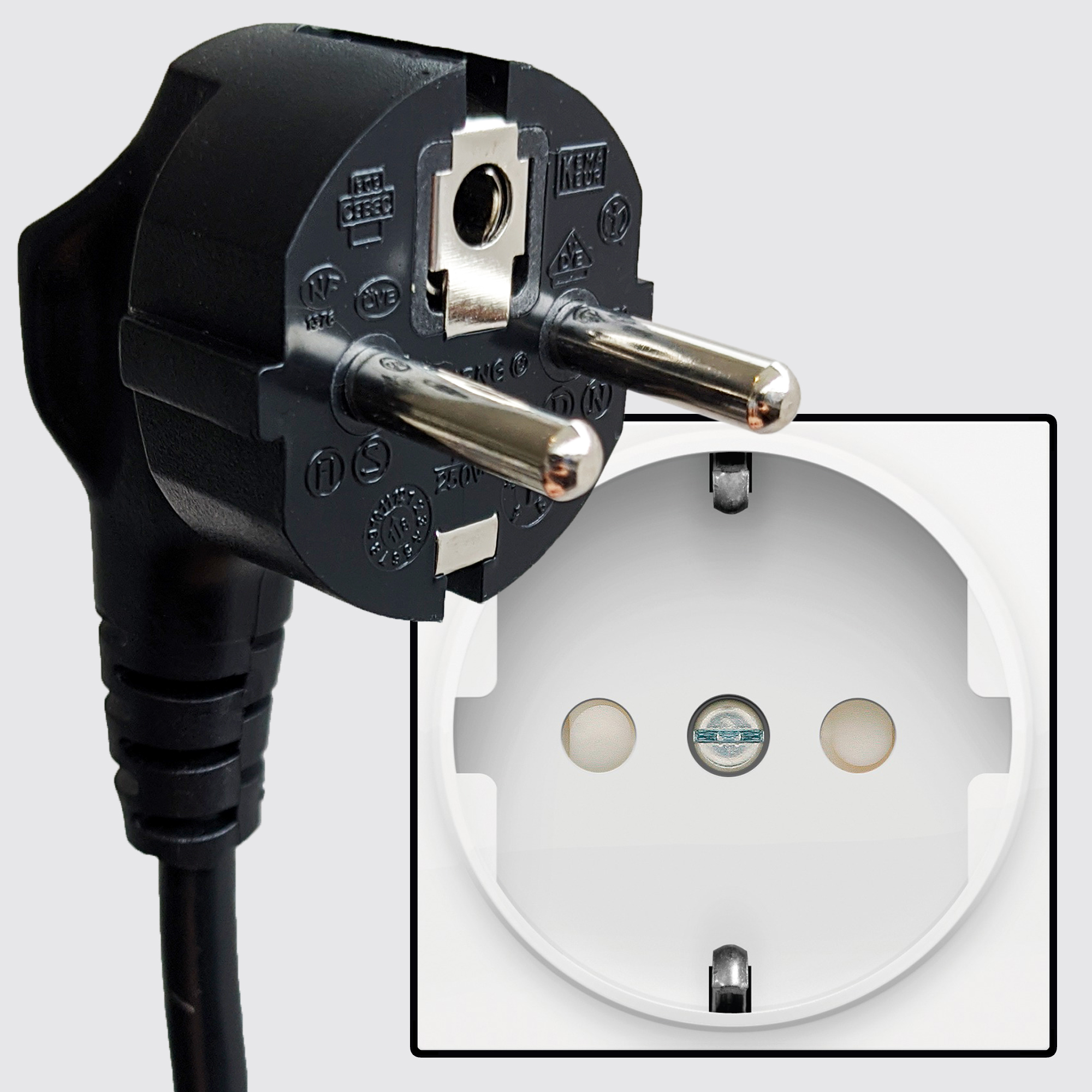
In the Netherlands (Holland) the power sockets are of type C and F. The standard voltage is 230 V and the standard frequency is 50 Hz.
You can see whether you need an adaptor HERE.
TYPE C
- commonly used in Europe, South America & Asia
- 2 pins
- not grounded
- 2.5 A, 10 A & 16 A
- almost always 220 – 240 V
- socket compatible with plug type C

TYPE F
- used almost everywhere in Europe & Russia, except for the UK & Ireland
- 2 pins
- grounded
- 16 A
- 220 – 240 V
- socket compatible with plug types C, E & F
CURRENCY AND PAYMENTS
The currency in the Netherlands is the EURO. Payments are generally made in cash or using a chip bank card with a MAESTRO logo.
Credit cards are NOT widely accepted. Credit cards are only accepted in hotels and large store chains. For small purchases at the canteen, supermarket and some restaurants and bars, credit cards are NOT accepted. Please, read more about credit card use in the Netherlands HERE.
Businesses do not accept American dollars, American Express cards or other currencies.
THE COUNTRY
For a glimpse of what the Netherlands looks like beyond Amsterdam, have a look at the movie below.
 TU Delft Planning and Design for the Just City